
Introduction: The $4,000 Mistake
The average woman owns 16 bras but only wears 3 to 5 of them regularly. That means roughly $4,000 worth of lingerie sits in drawers, tags still on, because it never actually fit.
Here is the uncomfortable truth: 8 out of 10 women are wearing the wrong bra size. Most are squeezing into bands that are too big and cups that are too small, while others are drowning in fabric that offers zero support. The result? Back pain, shoulder grooves, underwire rebellion, and a daily reminder that something just feels… off.
You do not need a boutique fitter. You do not need to stand awkwardly in a fluorescent dressing room while a stranger wraps a tape measure around you. You need a soft measuring tape, a mirror, and 10 minutes.
This guide is the exact fitting protocol used by professional bra fitters—broken down into five simple steps you can do in your bedroom. At the end, you will find a free printable bra size calculator and a checklist to confirm your new size actually works in real life.
Why Your Current Bra Size Is Probably Wrong
Bra sizing is not static. Your size changes with weight fluctuations, hormonal cycles, pregnancy, exercise routines, and aging. Yet most women last measured themselves in a department store fitting room five to ten years ago.
The old “measure under the bust, add four inches” method is outdated. Modern bra engineering uses direct measurement—no arbitrary math. Brands like ThirdLove, Cuup, and Savage X Fenty now design around precise ribcage and bust circumference data, which is why this guide uses the direct-to-band method.
If you have experienced any of the following, your size is wrong:
- Your band rides up in the back
- Straps dig into your shoulders or constantly slip off
- The center gore (the bridge between cups) floats away from your chest
- Breast tissue spills over the top or sides
- You adjust your bra multiple times per day
What You Need Before You Start
- A soft fabric measuring tape (metal construction tapes will not conform to your body)
- A non-padded, non-wired bra or a thin fitted tank top
- A mirror
- A notebook or our free printable calculator (download link below)
Pro tip: Measure yourself in the morning. By evening, fluid retention and natural swelling can add up to half an inch to your measurements.
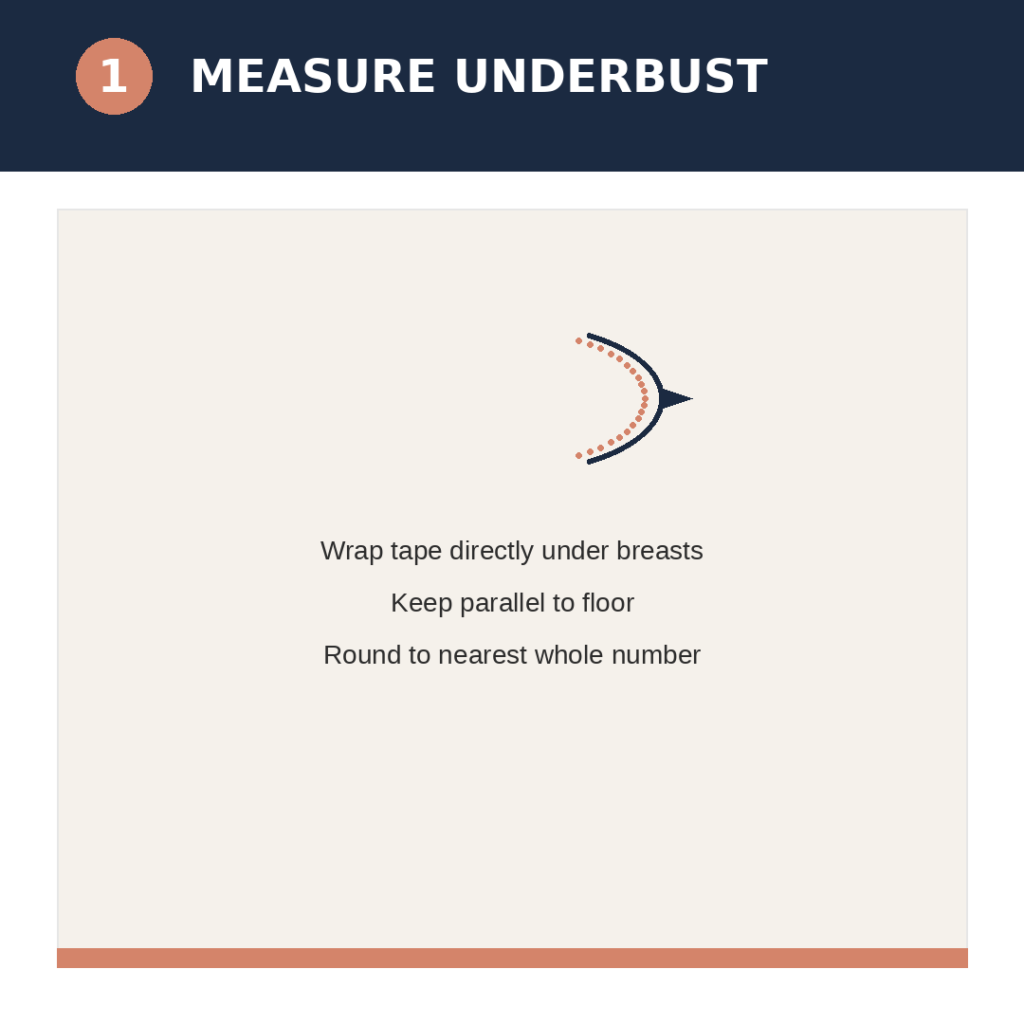
Step 1: Measure Your Underbust (Band Size)
Stand in front of the mirror with your arms relaxed at your sides. Wrap the measuring tape directly under your breasts, where the bra band sits. The tape should be parallel to the floor all the way around—check the back in the mirror to make sure it is not angled upward.
Pull the tape snug enough that it stays in place but not so tight that it compresses your skin. Breathe normally. Round to the nearest whole number.
Example: If you measure 31.5 inches, round to 32.
This number is your band size. In modern fitting, this is your starting point. No adding four inches. No adding five. If you measure 34, your band size is 34.
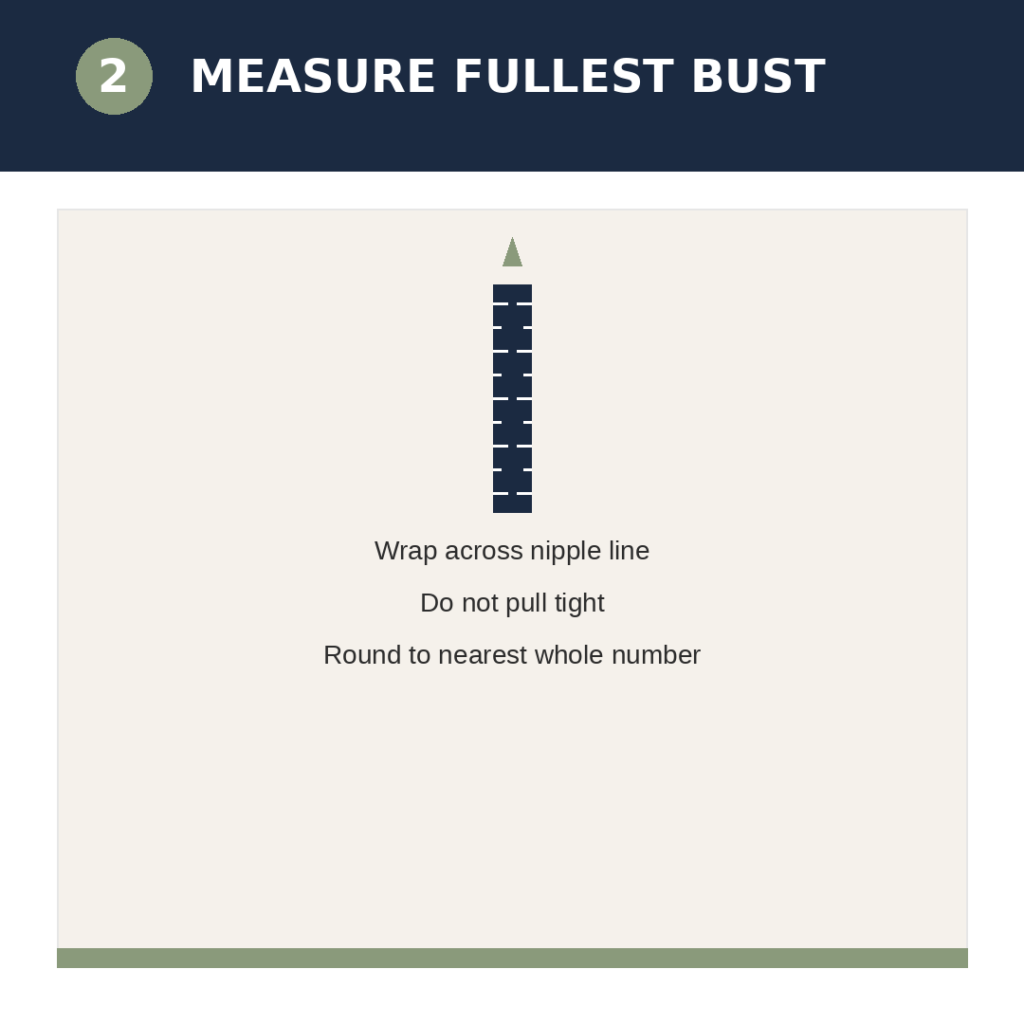
Step 2: Measure Your Fullest Bust (Cup Size)
Keep the measuring tape parallel to the floor. Wrap it around the fullest part of your bust—usually across the nipple line. Do not pull tight. The tape should rest lightly against your skin without compressing breast tissue.
Round to the nearest whole number.
Example: If you measure 38.5 inches, round to 39.
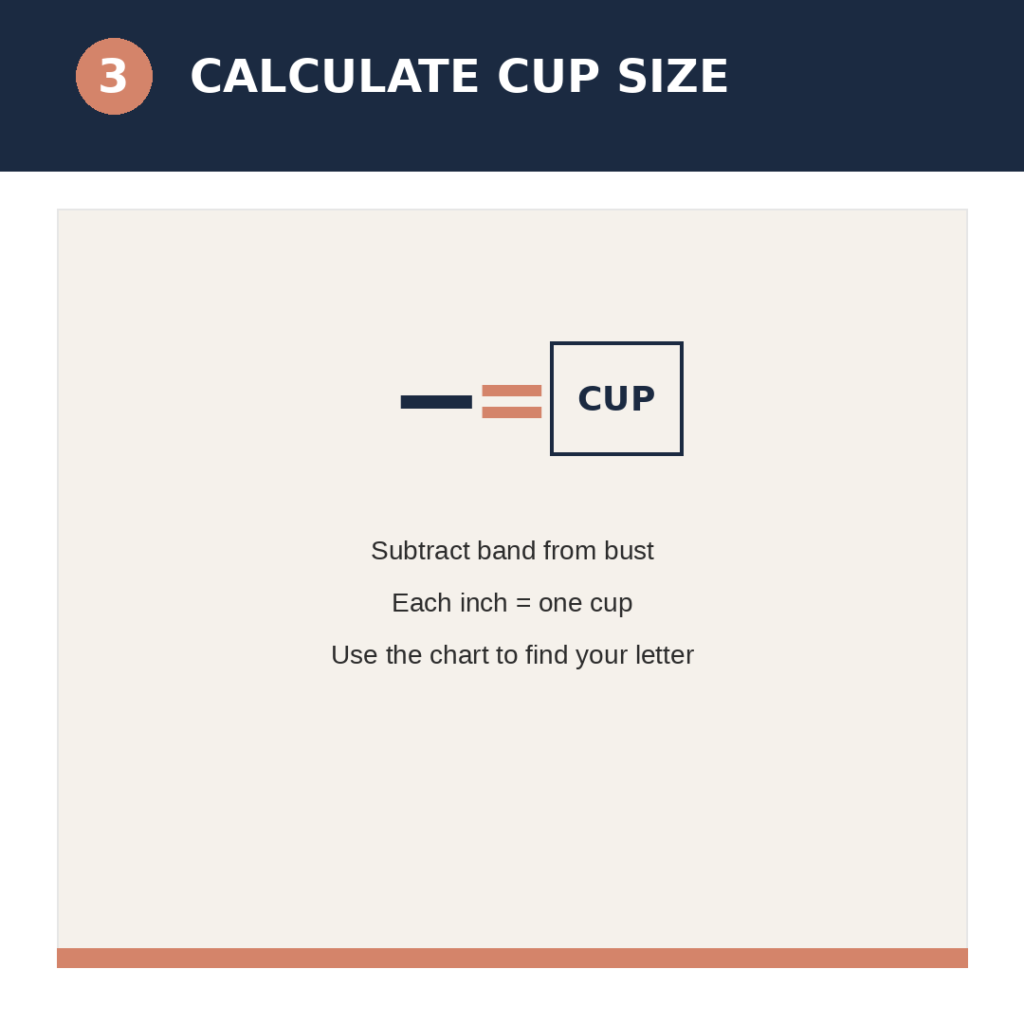
Step 3: Calculate Your Cup Size
Subtract your band measurement from your bust measurement. Each inch of difference represents one cup size.
| Difference | Cup Size |
|---|---|
| 1 inch | A |
| 2 inches | B |
| 3 inches | C |
| 4 inches | D |
| 5 inches | DD/E |
| 6 inches | DDD/F |
| 7 inches | G |
| 8 inches | H |
Example:
Bust: 39 inches
Band: 32 inches
Difference: 7 inches
Calculated Size: 32G
Important: Cup size is relative to band size. A 32C is not the same volume as a 38C. This is why “sister sizing” exists—more on that below.
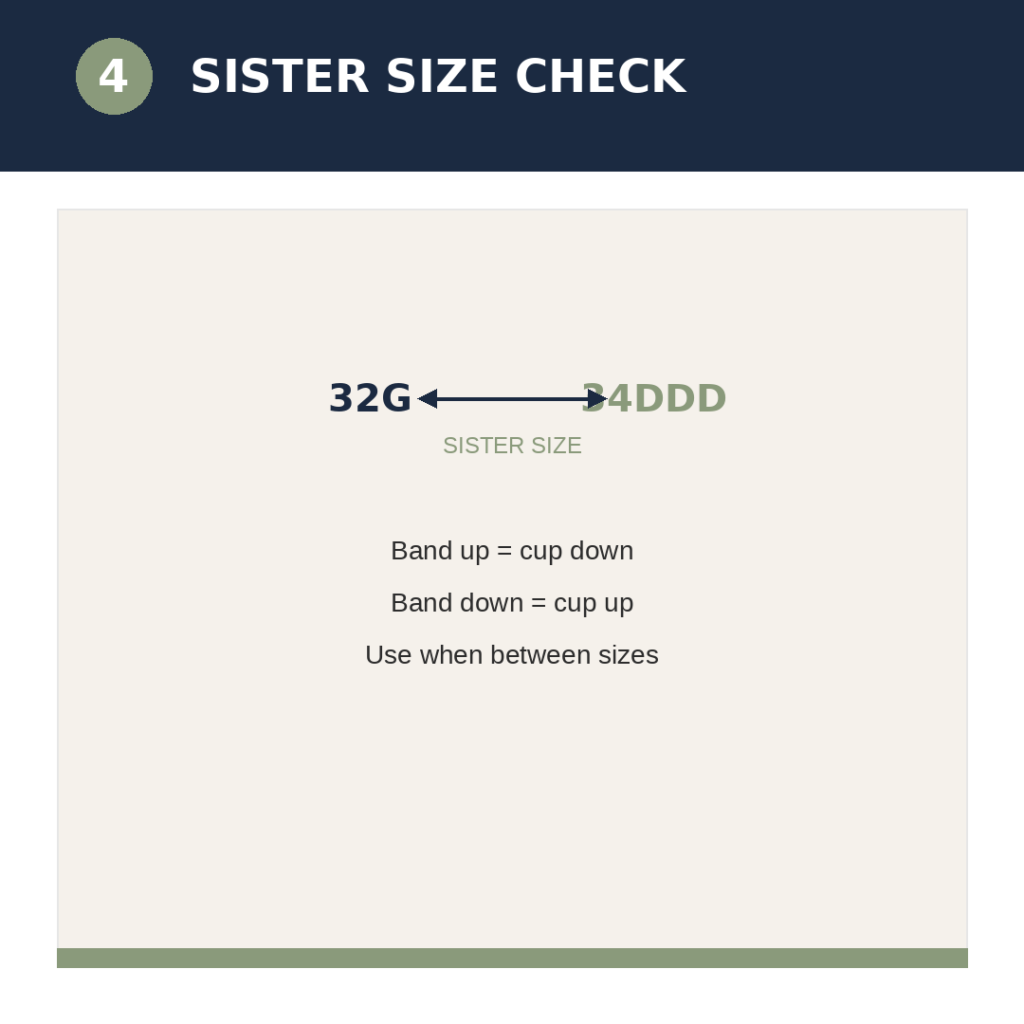
Step 4: The “Sister Size” Check
Bra bands stretch. A brand-new 32 band should fit on the loosest hook so you can tighten it as the elastic ages. If your underbust measures exactly 32 but you prefer a slightly looser band, your sister size is 34DDD (band up one, cup down one).
If a 32 band feels too tight in one brand but the cups fit perfectly, try 34DDD instead of forcing yourself into a 32. Conversely, if a 32 band feels too loose, try 30H.
Use sister sizing when:
- You are between band measurements (e.g., 31 inches underbust)
- A specific brand runs small or large in the band
- You need a longer or shorter band for torso length
Step 5: The Fit Checklist (Does It Actually Work?)
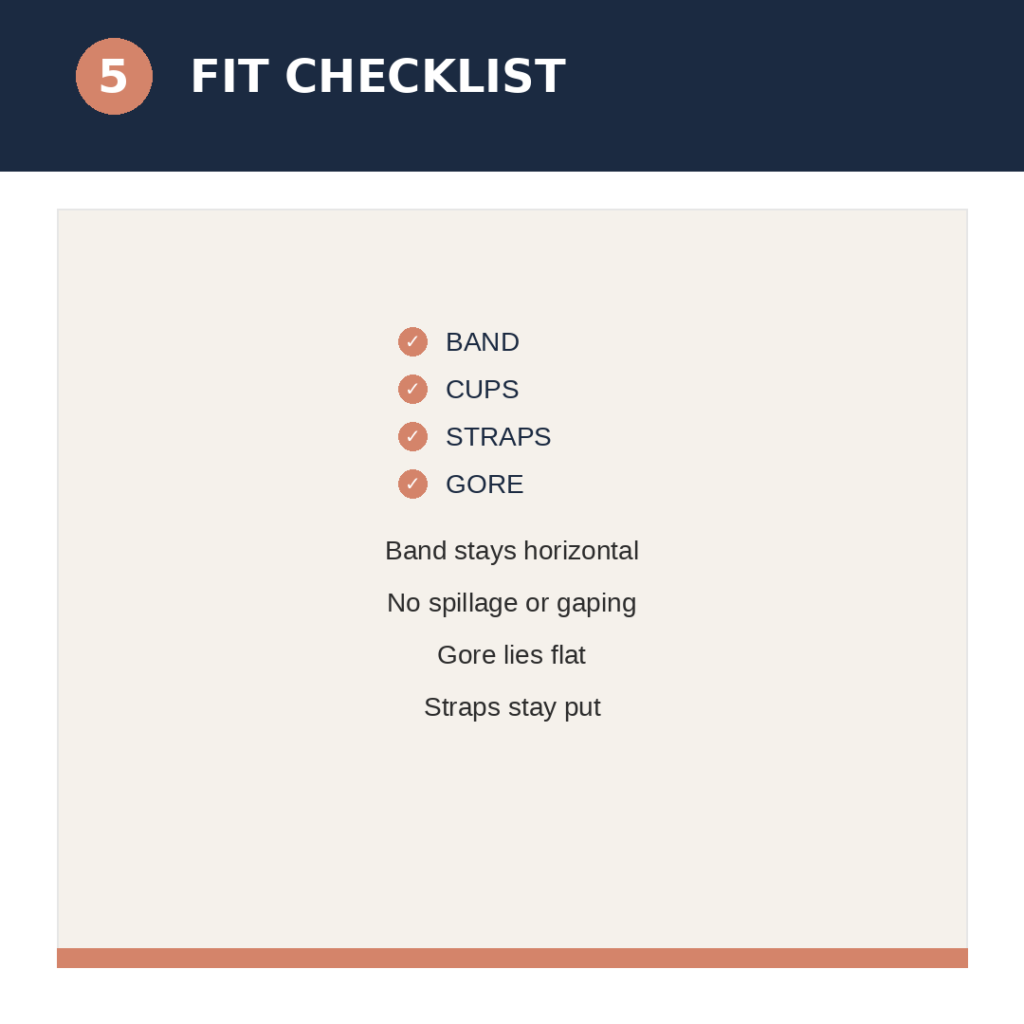
Measurement math gets you 90% of the way there. The final 10% is fit testing. Put on a bra in your calculated size and run through this checklist:
The Band
- It sits horizontally across your back. No riding up.
- You can slide two fingers underneath the band at your spine. It should feel snug, not painful.
- It stays in place when you raise your arms above your head.
The Cups
- No spilling over the top (quad-boob) or gaping fabric.
- Underwire, if present, should fully encase breast tissue without sitting on breast tissue at the sides.
- The center gore lies flat against your sternum.
The Straps
- They stay in place without digging in. If they leave deep red marks, your band is too loose and your straps are doing all the work.
- You should be able to fit two fingers under each strap.
If you pass all six checks, you have found your size. If not, adjust the band or cup up or down and retest.
Common Measuring Mistakes (And How to Fix Them)
Mistake 1: Measuring over a padded bra
Padding adds artificial volume. Always measure over something thin and fitted.
Mistake 2: Pulling the bust tape too tight
The bust measurement should be loose. Compressing tissue gives you a smaller cup size than you need.
Mistake 3: Ignoring asymmetry
Most women have one breast slightly larger than the other. Fit the larger breast and use a cookie insert for the smaller side if needed.
Mistake 4: Using the “add four inches” rule
This relic from 1950s bra manufacturing no longer applies to modern elastic bands. Use your direct underbust measurement.
Frequently Asked Questions
Can I measure myself without a soft tape?
Technically yes, but accuracy drops significantly. Use a piece of string and a ruler as a last resort. A soft tape costs under $5 and removes all guesswork.
Why does my size vary between brands?
Because bra sizing is not standardized. A 34D at Victoria’s Secret is not the same as a 34D at Wacoal. Use your calculated size as a starting point, then sister size up or down based on brand-specific fit.
I am pregnant. Should I measure now?
Measure for your current body. Many maternity and nursing bras are designed with stretch lace and multiple hook settings to accommodate fluctuation. Focus on band comfort; cup flexibility will follow.
What if my calculated size seems huge?
Cup letters are not breast volume absolutes—they are ratios. A 30G is a smaller breast volume than a 38C. Most women who think they are a D cup are actually an F or G in a smaller band. The letter is not the enemy; the wrong band is.
Final Thoughts: Fit Is a Practice, Not a Number
Your bra size is a starting point, not a life sentence. Bodies change. Brands vary. What matters is that you stop tolerating discomfort as “normal.”
Start with the steps mentioned above. Measure again in six months. The right fit changes how your clothes drape, how your posture holds, and how you feel by 3 PM on a Tuesday.
If you found this guide helpful, save it to your Pinterest board and share it with someone who is still wearing the size they bought in high school. They will thank you.